• How to Save Energy in Your Home

    How to Save Energy in Your Home

    This article was published on Wed 18 Mar 2020. At the time of publishing, this article was true and accurate, however, over time this may have changed. Some links may no longer work. If you have any concerns about this please contact us

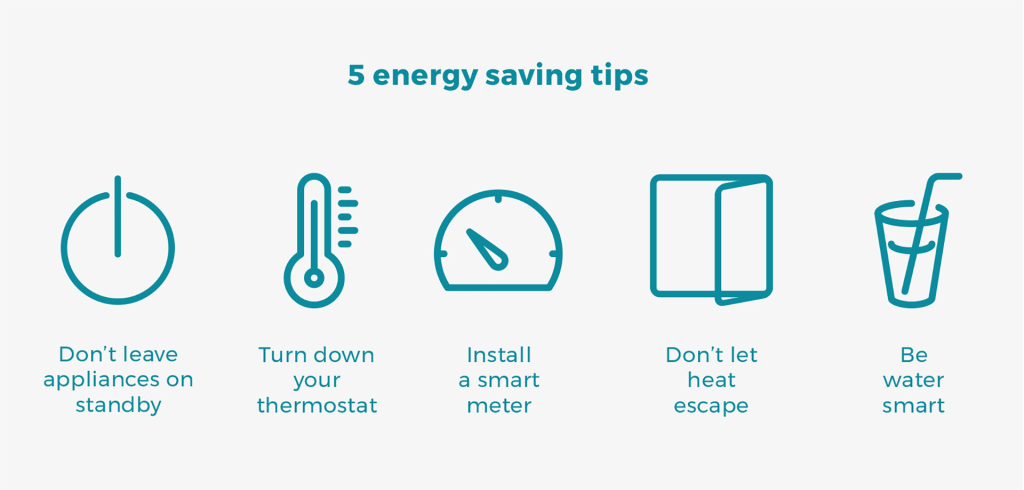
    You’d be surprised at how small changes can make a big difference. Whether you’re looking to cut energy costs, or do your bit for the environment, we’ve put together 5 top tips to help you save energy around your home.

    Don’t leave appliances on standby

    Leaving appliances on standby is one of the most common ways homeowners waste energy. Simply turning your appliances off at the plug could save you £30 a year*.

    Why not go one step further and invest in smart plugs? They allow you to turn your appliances on and off via your phone and certain models allow you to monitor your energy consumption.

    Smart plugs do require a small current to work, yet this is will have a negligible effect on your energy consumption, in comparison to leaving appliances on that could be increasing your energy bill.

    Turn down your thermostat

    We all want to come home to a warm house after a long, hard day, but cranking up that thermostat will cost you. Turning it down by just one degree, could save you up to £80 a year*! You can also program your thermostat, so it only comes on at certain times, to help save energy.

    Ask your energy supplier to install a smart meter

    A smart meter will give you a better understanding of your gas and electricity consumption, and produce more accurate bills, which will help you budget better. What’s more, there’s no initial set up fee and your energy supplier will get it going for you. By the end of 2024, smart meters will be offered to every home in Britain. Why not ask your energy supplier about installing yours today?

    Don’t let heat escape

    Double glazed windows are big energy savers. They help insulate your home, and at the same time, reduce your bills. You can also invest in draught excluders to prevent heat escaping from cracks in your flooring, under doors or through your letterbox.

    Be water smart

    The amount of hot water you use will also have an impact on the cost of your energy bills and your carbon footprint. Making some small changes, like washing your clothes on a lower temperature, washing up in a bowl instead of keeping the tap running, or even buying an energy efficient shower head could knock pounds off your bill each year.

    * Reference https://energysavingtrust.org.uk/home-energy-efficiency/energy-saving-quick-wins

  • Home Insurance Explained

    Home Insurance Explained

    This article was published on Thu 27 Feb 2020. At the time of publishing, this article was true and accurate, however, over time this may have changed. Some links may no longer work. If you have any concerns about this please contact us

    David Reeves, from our insurance team, explains how to navigate some common home insurance terms and work out what level of cover might be right for you.

    How do I work out what cover I’ll need?

    There are two types of home insurance: buildings and contents cover.

    Buildings cover refers to any permanent fixtures and fittings like bathrooms and fitted kitchens, as well as the structure of your home including any outbuildings such as garages and sheds.

    You’ll need to work out how much it would cost to rebuild your home, which is not the same as the market value of your property. Consider things such as demolition costs, surveyor’s fees and the actual cost to rebuild your home.

    If you obtained a survey on your property, an estimate of the rebuilding cost may be included in the report, but alternatively you can find many resources online including the ABI/BCIS Residential Rebuilding Costs calculator.

    If you own a leasehold property, it’s best to check what your responsibilities are and potentially what buildings cover you may need. If you are a renter/tenant, it’s unlikely that you will need buildings insurance, as this should be the landlord’s responsibility, but it’s always advisable to check your tenancy/rental agreement for details.

    Contents means the things you use to furnish your home, such as carpets and furniture, as well as all your personal belongings – essentially, all the things that would fall out if you turned your property upside down. Everyone should consider contents cover to protect their personal belongings, whether you own the property or are renting.

    You should think about how much it would cost to replace as new all the things you’ve got in your home – you might be surprised at how much it adds up to! There are many online calculators available to help you get a better view of the value of the things that make your property a home.

    How do I cover any items I take away from my home?

    Personal items like jewellery, mobile phones and cameras can normally be added to the personal possessions section of your contents quote, which offers cover against accidental loss, damage or theft outside the home.

    Levels of cover differ and some policies require you to specify single items worth over a certain amount on the policy.

    What do insurers mean when they talk about ‘valuables’?

    When insurers refer to ‘valuables’ they generally mean items such as pictures and other works of art, items of gold, silver or any other precious metal, jewellery, furs and stamp, coin or medal collections.

    What is domestic emergency cover?

    Domestic emergency cover provides immediate assistance for a number of domestic emergencies. ‘Emergency’ situations could include, for example, the breakdown of your main heating supply, plumbing and drainage problems, loss of domestic power supply, and damage to the roof. This cover may cost extra; however, many insurers provide this as standard.

    Covering possessions for family members at university?

    Many insurers offer cover for family members’ belongings if they’re kept within temporary accommodation at university. Sometimes this is standard to the policy but can be an additional cost with many.

    What are pairs, sets and suites?

    This typically gives you the option to upgrade your cover to ensure that if part of a pair, set or suite is damaged, lost or stolen, the insurer will pay the cost of replacing any undamaged items if they cannot be matched. Under the buildings section this would cover your bathroom and kitchen. The contents section will include items such as a three piece suite or dining room furniture.

    What’s the difference between standard and accidental damage?


    Standard buildings and/or contents cover insures against the main perils such as fire, theft and escape of water.

    Accidental damage for buildings could include accidental damage to sanitary fixtures, fixed glass and underground pipes and cables.

    Accidental damage for contents could include accidental damage to audio/visual equipment including TVs, stereos and desktop computers.

    Many insurers also offer “Extended accidental damage” as an extra under both buildings and contents insurance to cover any damage that you or your family might cause, such as putting a nail in a wall and bursting a pipe, or spilling wine or paint on your carpet.

    Why not take a look at Police Mutual Home Insurance?

    We provide a range of insurance products, to help protect people who own or rent their homes, including home insurance, which includes up to £500 in Home Emergency Cover, should the unexpected happen – Terms and Conditions apply. We also offer renters’ insurance for those that just need the reassurance of contents cover. Both of these are available to serving or retired Police Officers and Staff, Specials and your families.

    Why not talk to us today?

    Call us on 0151 242 7640  for more information

    We’re open from 9am to 5pm Monday to Friday.

    Home insurance is provided by Royal & Sun Alliance Insurance plc.

    Renters’ insurance is provided by Royal & Sun Alliance Insurance plc.

    Home Emergency Cover is provided by ARAG plc.

    PMGI Limited, trading as Police Mutual is authorised and regulated by the Financial Conduct Authority. Registered in England & Wales No. 1073408. Registered office: Alexandra House, Queen Street, Lichfield, Staffordshire WS136QS.

    For your security, all telephone calls are recorded and may be monitored.

  • International Day of Happiness 2020

    International Day of Happiness 2020

    This article was published on Thur 27 Feb 2020. At the time of publishing, this article was true and accurate, however, over time this may have changed. Some links may no longer work. If you have any concerns about this please contact us

    Recognising the pursuit of happiness as a fundamental human goal

    March 20 is the International Day of Happiness and this year’s theme is Happier Together, focusing on what we have in common, rather than what divides us. Since 2012 this day’s aim is ‘To promote happiness as a universal goal and aspiration in the lives of human beings around the world’.

    We all want to lead a happy life and want the people we love to be happy too. But as a society we are not giving this enough priority. Our actions and choices can affect our happiness. What makes us happy has less to do with our money or possessions and more to do with our attitudes and relationships with other people. 

    According to Action for Happiness there are 10 key areas in which we can take practical action to boost our happiness and to help prevent depression and anxiety.

    GREAT DREAM – 10 keys to happier living

    • Giving– Do kind things for others
    • Relating – Connect with other people
    • Exercising – Take care of your body
    • Awareness – Live Life mindfully
    • Trying out – keep learning new things
    • Direction – Have goals to look forward to
    • Resilience – Find ways to bounce back
    • Emotion – Look for what’s good
    • Emotion – Look for what’s good
    • Acceptance – Be comfortable with who you are
    • Meaning – Be part of something bigger 

    Take the Action for Happiness Pledge

    “I will try to create more happiness and less unhappiness in the world around me”

    What to do if you aren’t happy

    • Find 3 good thing each day
    • Thank the people you’re grateful for
    • Look for the good in those around you
    • Bring mindfulness into your day
    • Find your strengths and focus on them
    • Get help if you’re struggling

    Police Mutual Products & Services

    If you are struggling to be happy because of money worries, Police Mutual are here to help. We want to break down the stigma surrounding debt and get people talking about money.

    We’ve teamed up with PayPlan, one of the UK’s leading free debt advice providers, who offer free and confidential advice to anyone in serious financial difficulties.

    They’re able to advise you on a range of debt solutions suited to your individual circumstances, helping to protect you and your family with a sustainable way to manage your debt.

    Get free and confidential help to combat your debt, call PayPlan on 0800 197 8433.  If you don’t want to talk on the phone contact them using their online form. www.payplan.com

    If you just want someone to talk to about emotional issues then call our Care Line Service provided by Health Assured. You can access advice and information at the end of a phone, helping with a range of concerns including emotional support.  To talk to someone please call 0800 028 1708 or take a look at the e-portal –

    Health & Wellbeing e-portal

    https://healthassuredeap.co.uk

    Username: policemutual

    Password: careline

    Police Mutual offer a range of wellbeing support services, for more details check out the For You pages on our website at www.policemutual.co.uk

    Police Mutual Assurance Society Limited, trading as Police Mutual, is an incorporated friendly society. Registered office: Alexandra House, Queen Street, Lichfield, Staffordshire, WS13 6QS. Authorised by the Prudential Regulation Authority and regulated by the Financial Conduct Authority and the Prudential Regulation Authority.

    Want to learn more? Access our wellbeing hub here.

  • Time to Talk, Time to Change – Putting an End to Mental Health Discrimination

    Time to Talk, Time to Change – Putting an End to Mental Health Discrimination

    This article was published on Fri 31 Jan 2020. At the time of publishing, this article was true and accurate, however, over time this may have changed. Some links may no longer work. If you have any concerns about this please contact us

    Choose talk, Change lives

    We know that talking about mental health can feel awkward, but it doesn’t have to. Mental health problems affect one in four of us, yet many people can feel isolated, ashamed and worthless because of this. Time to Talk Day encourages everyone to be more open about mental health – to talk, to listen, to change lives. 

    That’s why it’s so important that Time To Talk Day on 6th February 2020 gives people the opportunity to talk about mental health and how it can affect anyone, of any age, gender or background. Time to Talk day isn’t just about helping others, its also important to understand and recognise your own wellbeing

    Looking after your own mental health

    • Keep active – exercise helps both your physical and mental health, this can just be a regular walk
    • Eat Well – what you eat and your mood can be connected, so think carefully about what you are eating
    • Ask for help – sometimes you need help from others, so don’t be afraid to ask for this help
    • Take a break – make sure you have regular time to relax and re-charge
    • Do something you’re good at – doing something you enjoy and you are good at can give you the ‘feel good’ boost that everyone needs

    Top Tips to Support Others

    • Check in – ask others how they are feeling
    • Listen and don’t judge – its great that people are happy to talk to you about how they are feeling, so ensure you really listen to them
    • Treat them in the same way – don’t change the way you act towards someone once you are aware of their poor mental health
    • Don’t forget little gestures can have a big impact – this may just be making them a cup of tea or inviting them out for lunch
    • Ask twice – asking someone twice how they are feeling will give them the opportunity to be honest

    Financial problems is one of the biggest worries that can negatively affect your mental health. According to Money and Mental Health Policy Institute over 420,000 people in problem debt consider taking their own life in England every year, while more than 100,000 people in debt actually attempt suicide annually*.

    It’s important to start talking about money worries before your situation gets worse. Talking about money will give you the confidence to get help and find out who can best advise you on any problems. It can give you a great sense of relief to share your problems, so you’re not facing them alone.  If you don’t feel ready to talk to someone, write down what you are going through and share it with somebody you can trust.  It’s important to seek professional advice as soon as possible and not wait until it’s more difficult to find a solution.

    Police Mutual are here to help. We want to break down the stigma surrounding debt and get people talking about money.

    We’ve teamed up with PayPlan, one of the UK’s leading free debt advice providers, who offer free and confidential advice to anyone in serious financial difficulties.

    They’re able to advise you on a range of debt solutions suited to your individual circumstances, helping to protect you and your family with a sustainable way to manage your debt.

    Get free and confidential help to combat your debt, call PayPlan on 0800 197 8433. If you don’t want to talk on the phone contact them using their online form. www.payplan.com


    Police Mutual Products & Services

    Police Mutual offer a range of wellbeing support services, for more details check out the For You pages on our website.

    The Care Line Service provided by Health Assured can offer advice and information at the end of a phone, helping with a range of concerns including emotional support. To talk to someone please call 0800 028 1708 or take a look at the e-portal –

    Health & Wellbeing e-portal

    https://healthassuredeap.co.uk

    Username: policemutual

    Password: careline

    The (not so) small print

    *Money and Health Policy Institute report ‘a silent killer’ Published December 2018

    Police Mutual Assurance Society Limited, trading as Police Mutual, is an incorporated friendly society. Registered office: Alexandra House, Queen Street, Lichfield, Staffordshire, WS13 6QS. Authorised by the Prudential Regulation Authority and regulated by the Financial Conduct Authority and the Prudential Regulation Authority.

    Want to learn more? Access our wellbeing hub here.

  • Blue Monday 2020

    Blue Monday 2020

    This article was published on Thu 30 Jan 2020. At the time of publishing, this article was true and accurate, however, over time this may have changed. Some links may no longer work. If you have any concerns about this please contact us

    ‘Blue Monday’ is said to fall on the third Monday of January every year. It is considered to be the most depressing day of the year, factors including the weather, debt, the time elapsed since Christmas, and unsuccessful New Year’s resolutions all cause this date to be regarded as the most depressing day of the year.

    With money worries being one of the largest wellbeing challenges facing members of the Police family, it’s important to start talking about money worries before your situation gets worse.  Worrying about money can negatively affect your mental health and for those people experiencing mental health problems it makes it harder to manage their finances. 

    The stress of dealing with financial pressures does not just affect your personal life. It can affect your work, family life, health and relationships. We recognise that sharing your concerns with the people closest to you isn’t always an option.

    Taking positive steps to address things that are weighing upon our minds is always important Police Mutual are here to help. We want to break down the stigma surrounding debt and get people talking about money.   We’ve teamed up with PayPlan*, one of the UK’s leading free debt advice providers, who offer free and confidential advice to anyone in serious financial difficulties.

    They’re able to advise you on a range of debt solutions suited to your individual circumstances, helping to protect you and your family with a sustainable way to manage your debt.

    Get free and confidential help to combat your debt, call PayPlan on 0800 197 8433.  If you don’t want to talk on the phone, contact them using their online form.

    Improve your financial wellbeing with our online tools here

    • Budget Calculator
    • Financial fitness tool
    • Information on managing debt
    • Life Planner

    Police Mutual Products & Services

    Police Mutual offer a range of wellbeing support services, for more details check out the For You pages on our website at www.policemutual.co.uk

    The Care Line Service provided by Health Assured can offer advice and information at the end of a phone, helping with a range of concerns including emotional support.  To talk to someone please call 0800 028 1708 or take a look at the e-portal –

    Health & Wellbeing e-portal

    https://healthassuredeap.co.uk

    Username: policemutual

    Password: careline

    *PayPlan is a trading name of Totemic Limited. Totemic Limited is a limited company registered in England, Company Number: 2789854. Registered Office: Kempton House, Dysart Road, PO Box 9562, Grantham, NG31 0EA. Totemic Limited is authorised and regulated by the Financial Conduct Authority. Financial Conduct Authority Number: 681263.

    Police Mutual is a trading name of Police Mutual Assurance Society Limited (PMAS), PMAS is an incorporated friendly society authorised by the Prudential Regulation Authority and regulated by the Financial Conduct Authority and Prudential Regulation Authority. Registered office: Alexandra House, Queen Street, Lichfield, Staffordshire, WS13 6QS.

    Want to learn more? Access our wellbeing hub here.

  • Talk Money Week 2019

    Talk Money Week 2019

    This article was published on Mon 18 Nov 2019. At the time of publishing, this article was true and accurate, however, over time this may have changed. Some links may no longer work. If you have any concerns about this please contact us

    Money and debt is often seen as a taboo subject but Talk Money Week is here to break the stigma.

    According to the recent Police Federation Pay & Morale survey* around one in eight officers are seeking financial support to cover living costs. Talk money week is an ideal time to review your finances and improve your financial wellbeing.

    Worrying about money can negatively affect your mental health and for those people experiencing mental health problems it makes it harder to manage their finances.  Problem debt can also be linked to suicide.

    According to Money and Mental Health Policy Institute over 420,000 people in problem debt consider taking their own life in England every year, while more than 100,000 people in debt actually attempt suicide annually.**

    It’s important to start talking about money worries before your situation gets worse.  Talking about money will give you the confidence to get help and find out who can best advise you on any problems.  It can give you a great sense of relief to share your problems, so you’re not facing them alone.  If you don’t feel ready to talk to someone, write done what you are going through and share it with somebody you can trust.  It’s important to seek professional advice as soon as possible and not wait until it’s more difficult to find a solution.

    Police Mutual are here to help. We want to break down the stigma surrounding debt and get people talking about money.

    We’ve teamed up with PayPlan, one of the UK’s leading free debt advice providers, who offer free and confidential advice to anyone in serious financial difficulties.***

    They’re able to advise you on a range of debt solutions suited to your individual circumstances, helping to protect you and your family with a sustainable way to manage your debt.

    Get free and confidential help to combat your debt, call PayPlan on 0800 197 8433If you don’t want to talk on the phone, it is also possible to email them.

    Below are some tips on how to improve your financial wellbeing

    • Use our budget calculator here to help you manage your money. Set yourself a daily spend limit based on how much disposable cash you have each month
    • Set up a separate bill account and transfer an amount each month to cover the cost of all your household bills
    • Check your bank balance each week so there are no nasty surprises. Consider using an app so you can see all your accounts in one place
    • Switch your current account – banks will often pay you to switch accounts use the link here for more information
    • Look at your general insurance, using the link here for Police Mutual car insurance and here for Police Mutual home insurance
    • Check your utility bills, for more information use the link here
    • Review your mortgage – for more information on the Police Mutual mortgage advice service click here
    • Check your credit score using one of the various companies available online including, Experian, Equifax or CallCredit

    Police Mutual Services

    Police Mutual offer a range of wellbeing support services, for more details check out the For You pages on our website at www.policemutual.co.uk

    The Care Line Service provided by Health Assured can offer advice and information at the end of a phone, helping with a range of concerns including emotional support.  To talk to someone please call 0800 028 1708 or take a look at the e-portal:

    Health & Wellbeing e-portal
    https://healthassuredeap.co.uk/
    Username: policemutual
    Password: careline

    The (not so) small print

    * Police Federation’s annual Pay & Morale survey results published in November 2019

    ** Money and Health Policy Institute report ‘a silent killer’ Published December 2018

    *** PayPlan is a trading name of Totemic Limited. Totemic Limited is a limited company registered in England, Company Number: 2789854. Registered Office: Kempton House, Dysart Road, PO Box 9562, Grantham, NG31 0EA. Totemic Limited is authorised and regulated by the Financial Conduct Authority. Financial Conduct Authority Number: 681263.

    Police Mutual is a trading name of Police Mutual Assurance Society Limited (PMAS), PMGI Limited (PMGI) and Mortgage Excellence Plc (MEX).  PMAS is an incorporated friendly society authorised by the Prudential Regulation Authority and regulated by the Financial Conduct Authority and Prudential Regulation Authority. PMGI and MEX are authorised and regulated by the Financial Conduct Authority. All Police Mutual companies are registered in England and Wales.  PMGI, register no. 1073408; MEX, register no. 03527577. Registered office: Alexandra House, Queen Street, Lichfield, Staffordshire, WS13 6QS.

    Want to learn more? Access our wellbeing hub here.

  • Remembrance Day 2019

    Remembrance Day 2019

    This article was published on Tue 05 Nov 2019. At the time of publishing, this article was true and accurate, however, over time this may have changed. Some links may no longer work. If you have any concerns about this please contact us

    The Royal British Legion has been supporting Service men and women, ex-serving personnel and their families since 1921 and brought together four national organisations that had established themselves after the First World War.  These were:

    • The National Association of Discharged Sailors and Soldiers
    • The British National Federation of Discharged and Demobilized Sailors and Soldiers
    • The Comrades of The Great War
    • The Officers’ Association

    The red poppy symbolises both Remembrance and also hope for a peaceful future. People wear poppies to show support of the Armed Forces community.

    Wearing a poppy is not compulsory and is a very personal choice and reflects your own experience and personal memories.

    What is the inspiration and history behind the poppy becoming a symbol of Remembrance?

    During the WW1, the countryside in Western Europe was bombed considerably and stunning landscapes were turned into bleak, muddy and barren fields where very little flora or fauna could grow. 

    However there was an exception to this, the bright red Flanders poppies. The poppies were so resilient they flourished and grew in vast amounts.

    In the Spring of 1915, Lieutenant Colonel John McCrae was so moved by seeing the poppies that he wrote the now famous poem ‘In Flanders Fields’.

    In Flanders Fields
    The poem by John McCrae

    In Flanders’ fields the poppies blow
    Between the crosses, row on row,
    That mark our place: and in the sky
    The larks, still bravely singing, fly
    Scarce heard amid the guns below.

    We are the dead. Short days ago
    We lived, felt dawn, saw sunset glow,
    Loved and were loved, and now we lie
    In Flanders’ fields.

    Take up our quarrel with the foe;
    To you from failing hands we throw
    The torch; be yours to hold it high,
    If ye break faith with us who die
    We shall not sleep, though poppies grow
    In Flanders’ Fields.

  • National Stress Awareness Day 2019

    National Stress Awareness Day 2019

    This article was published on Mon 04 Nov 2019. At the time of publishing, this article was true and accurate, however, over time this may have changed. Some links may no longer work. If you have any concerns about this please contact us

    We all know what it’s like to feel stressed – being under pressure is a normal part of life. But becoming overwhelmed by stress can lead to mental health problems or make existing problems worse.

    Stress isn’t a mental health condition, but it can cause a mental health problem, like anxiety or depression or it can cause an existing one to get worse.

    Stress can also affect you physically, it can cause headaches, tiredness or stomach problems.

    National Stress Awareness Day is a great opportunity to take a moment to think about your own wellbeing and find out more on how to manage stress.

    What you can do to help with stress

    There are various steps you can take to cope with being under pressure, remember, different things work for different people.

    • Identify your triggers and take control – working out what triggers your stress can help you anticipate when you may feel stressed and what you could do about it in advance.
    • Organise your time – making some adjustments to the way you organise your time can help you feel more in control and able to handle the pressure you are feeling.
    • Be active – exercise can help clear your head and then let you deal with your problems more calmly. Go outside to exercise, as fresh air and spending time in nature can really help.
    • Talk to other people – friends, family & colleagues can help support you through the stress you are feeling, you may even have a laugh and start to relax. You may also want to consider talking to a professional counsellor.
    • Do something you enjoy – spending time doing something you enjoy will take your mind off how you are feeling. Everyone needs to take time for themselves, it can be as simple as having a bath or reading a book.
    • Avoid unhealthy ways to cope – many people use alcohol, smoking, chocolate and gambling to try and relieve the stress they are feeling, none of these things will help in the long term, use healthy coping strategies like going for a run, listening to music or walking the dog.
    • Challenge yourself – learning new skills and setting yourself new goals will help build your confidence and make you feel good about yourself.
    • Help others – people who volunteer in the community or for a worthwhile cause tend to be more resilient.
    • Try to be positive – think of all the things you are grateful for, write down or say out loud 3 things that went well each day.
    • Address some of the causes – where possible improve some of the issues that are putting pressure on you.
    • Accept the thing you can’t change – it’s not easy, but accepting that there are some things happening to you that you can’t do anything about will help you focus your time and energy elsewhere.

    Worrying about money can be extremely stressful and may lead to mental health conditions.

    Police Mutual are here to help. We want to break down the stigma surrounding debt and get people talking about money.

    We’ve teamed up with PayPlan, one of the UK’s leading free debt advice providers, who offer free and confidential advice to anyone in serious financial difficulties.

    They’re able to advise you on a range of debt solutions suited to your individual circumstances, helping to protect you and your family with a sustainable way to manage your debt.

    Get free and confidential help to combat your debt, call PayPlan on 0800 197 8433

    Police Mutual Services

    Police Mutual offer a range of wellbeing support services, for more details check out the For You pages on our website at www.policemutual.co.uk

    The Care Line Service provided by Health Assured can offer advice and information at the end of a phone, helping with a range of concerns including emotional support. To talk to someone please call 0800 028 1708 or take a look at the e-portal –

    Health & Wellbeing e-portal
    https://healthassuredeap.co.uk/
    Username: policemutual
    Password: careline

    The (not so) small print

    Police Mutual Assurance Society Limited, trading as Police Mutual, is an incorporated friendly society. Registered office: Alexandra House, Queen Street, Lichfield, Staffordshire, WS13 6QS. Authorised by the Prudential Regulation Authority and regulated by the Financial Conduct Authority and the Prudential Regulation Authority.

    PayPlan is a trading name of Totemic Limited. Totemic Limited is a limited company registered in England, Company Number: 2789854. Registered Office: Kempton House, Dysart Road, PO Box 9562, Grantham, NG31 0EA. Totemic Limited is authorised and regulated by the Financial Conduct Authority. Financial Conduct Authority Number: 681263.

    Want to learn more? Access our wellbeing hub here.

  • How to Protect Yourself Against Cyber Attacks

    How to Protect Yourself Against Cyber Attacks

    This article was published on Thur 24 Oct 2019. At the time of publishing, this article was true and accurate, however, over time this may have changed. Some links may no longer work. If you have any concerns about this please contact us

    October is National Cyber Security Awareness Month and we’re doing our bit to raise awareness about cybercrime and how it can affect your daily life – whilst bringing you top tips on how to stay safe online.

    We’re more connected to technology than ever before. From shopping and online banking, to email and social media, our personal information is increasingly digitalised. And as a consequence, the threat of cyberattacks continues to expand and evolve.

    That’s why it’s vitally important to stay secure and safe online.

    What is cybercrime?

    Cybercrime is any criminal activity that involves a computer or network.

    Examples include, fraud, bullying, theft or grooming that are committed online using a device, such as smartphones, tablets or other devices.

    Cybercrime also includes crimes against your computer or device, such as contaminating or corrupting it with viruses or taking-over your social media profile, email account or your website.

    What is cyber security?

    Cyber security is the measures you can take to protect the devices you use, and services you access online from cybercrime. Cyber security is also a way of preventing unauthorised access to your personal information that you store on a device or online.

    Now that smartphones, computers and the internet are such a fundamental part of everyday life, cyber security is essential for everyone, not just businesses, to go about their day-to-day lives.

    What can I do to protect myself?

    There are a number of steps you can take to stay safe and secure online. From updating your privacy settings, to getting the latest software, here are some tips and resources to help you protect your devices and data.

    OWN IT

    Stay safe on social media by limiting what you share, changing your passwords and checking your security settings.

    You should also update your privacy settings regularly, whether this is on shopping websites, your email or music services you use.

    Make sure your personal information is safe on the apps you download, too. With so many apps available, data like your name, email address or home address may be being used without realising it.

    SECURE IT

    By creating strong passwords or turning on multifactor authentication (double log-in), you’re building stronger layers of protection against your personal information and keeping your devices well-protected.

    PROTECT IT

    It’s also important that you are using the latest security software and apply updates when possible. This will help to ensure cybercriminals are kept out – and stay out!

    Helpful resources:

    us.norton.com/internetsecurity-privacy-cyber-safety-guide-tips-to-own-it-secure-it-protect-it.html

    takefive-stopfraud.org.uk/

    ncsc.gov.uk/section/information-for/individuals-families

    stopthinkconnect.org/tips-advice/general-tips-and-advice

    getsafeonline.org/

  • Mental Health Awareness Day 2019

    Mental Health Awareness Day 2019

    This article was published on Thur 10 Oct 2019. At the time of publishing, this article was true and accurate, however, over time this may have changed. Some links may no longer work. If you have any concerns about this please contact us

    Mental health problems can affect anyone, any day of the year, but as today is mental health awareness day, it is a great day to look after your own wellbeing and show support to others.

    Mental health describes how you are feeling and how well you can cope with day to day life. Taking care of your mental health is as important as taking care of your physical health.  Mental health problems affect around 1 in 4 people*.

    How to take care of your mental health

    • Talk about your feelings – talking can help you take charge of your wellbeing
    • Keep active – regular exercise can boost your self-esteem, can help you concentrate, sleep and overall feel better
    • Eat well – a diet that is good for your physical health is also good for your mental health
    • Drink sensibly – drinking alcohol is not a good way to manage difficult feelings
    • Keep in touch – it’s good for you to catch up with friends and family face to face or over the phone
    • Ask for help – its ok not to be ok, so ask for help if you are struggling
    • Take a break – a change of scenery or pace is good for you
    • Do something you’re good at – enjoying yourself can help beat stress
    • Accept who you are – accept your uniqueness, don’t wish you were someone else
    • Care for others – supporting others uplifts you as well as them

    Worrying about money can negatively affect your mental health and for those people experiencing mental health problems it makes it harder to manage their finances. Problem debt can also be linked to suicide.

    According to Money and Mental Health Policy Institute, over 420,000 people in problem debt consider taking their own life in England every year, while more than 100,000 people in debt actually attempt suicide annually**.

    Police Mutual are here to help. We want to break down the stigma surrounding debt and get people talking about money.

    We’ve teamed up with PayPlan, one of the UK’s leading free debt advice providers, who offer free and confidential advice to anyone in serious financial difficulties.

    They’re able to advise you on a range of debt solutions suited to your individual circumstances, helping to protect you and your family with a sustainable way to manage your debt.

    Get free and confidential help to combat your debt, call PayPlan on 0800 197 8433

    Police Mutual Care Line Service provided by Health Assured can offer advice and information at the end of a phone, helping with a range of concerns. To talk to someone please call 0800 028 1708 or take a look at the e-portal –

    Health & Wellbeing e-portal
    https://healthassuredeap.co.uk/
    Username: policemutual
    Password: careline

    Police Mutual offer a range of wellbeing support services, for more details check out the For You pages on our website www.policemutual.co.uk

    All of our Relationship Managers and Financial Wellbeing Consultants are trained Mental Health First Aiders

    *According to Mental Health First Aid Organisation
    **Money and Health Policy Institute report ‘a silent killer’ Published December 2018

    Police Mutual Assurance Society Limited, trading as Police Mutual is an incorporated friendly society Registered office: Alexandra House, Queen Street, Lichfield, Staffordshire, WS13 6QS. Authorised by the Prudential Regulation Authority and regulated by the Financial Conduct Authority and Prudential Regulation Authority.

    Want to learn more? Access our wellbeing hub here.